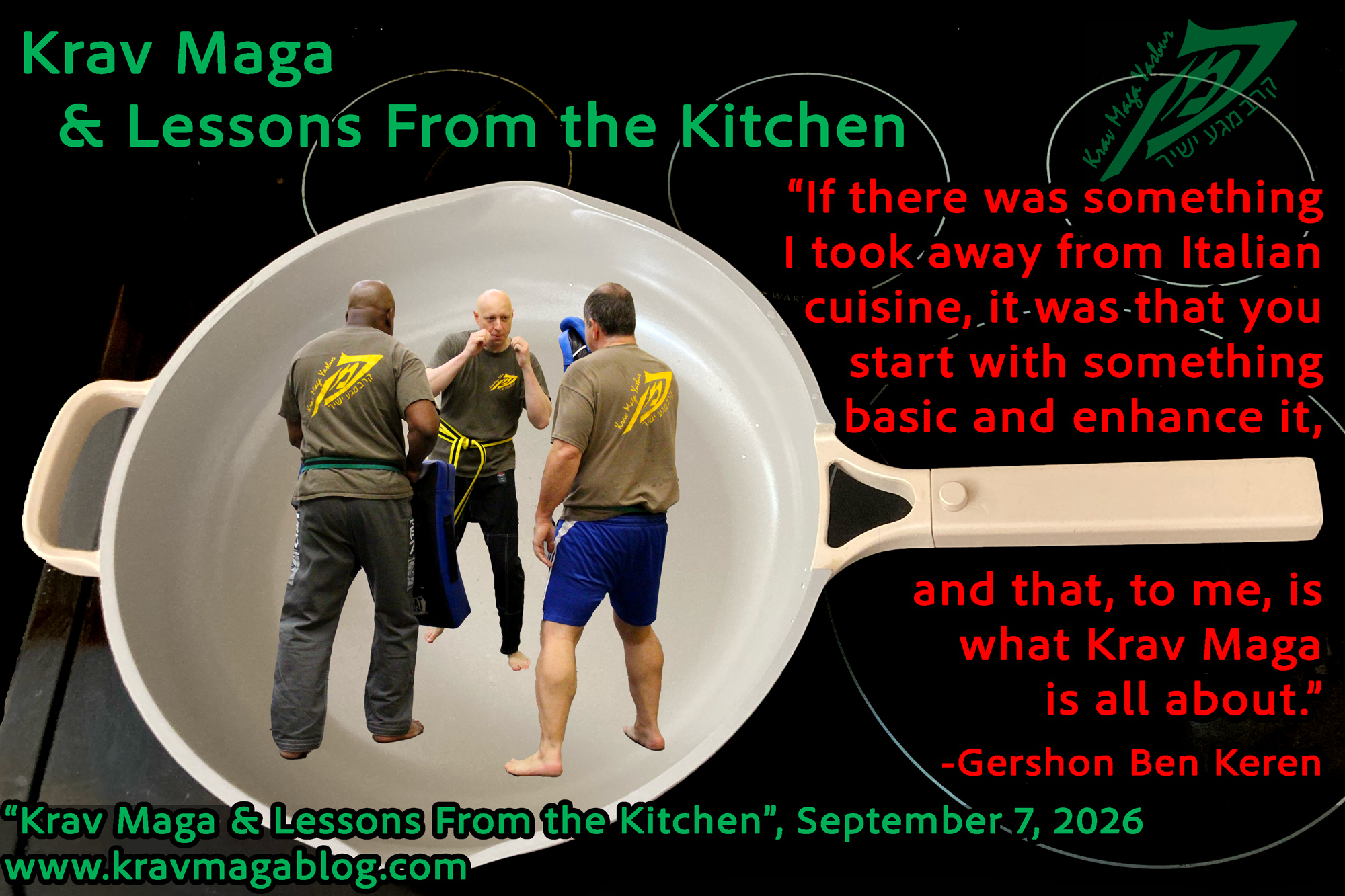
Glasgow has a strong Italian community. I’ve travelled, spent time in Italy, and I still believe that some of the best Italian food I’ve had, is in Glasgow (and I don’t believe it’s purely down to having an “unsophisticated palette”). Italian food is direct and extremely simple, like Krav Maga. I introduce this idea at an early stage, in the hope that you bear with me on analogies and comparisons etc., and the idea that we can look at a seemingly “unrelated” area and learn something from taking ...(Click Here To Read The Article)
There are always members of our society who claim that everything is getting worse. It’s a play that politicians make, regardless of what the statistics say. It’s also one that we are prone to believe. The simplest explanation of this is our evolutionary past i.e., paying attention to threats/danger (bad things) was more important for our survival than focusing on positives e.g., consider two of our ancestors walking through a forest, one focusing on the beautiful flowers and birdsong, whilst th...(Click Here To Read The Article)
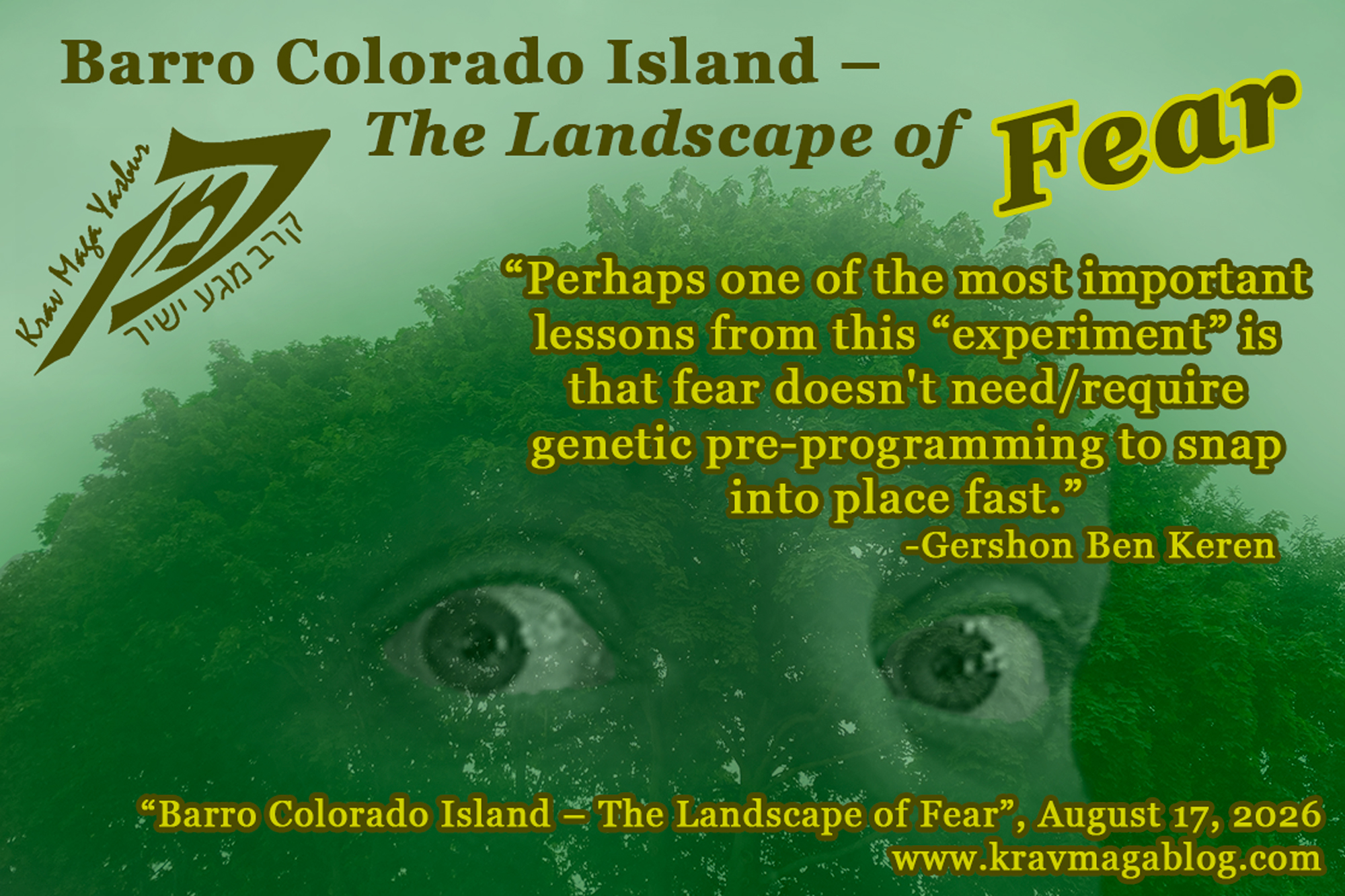
Barro Colorado Island (BCI) sits in the middle of the Panama Canal and has been a biological reserve since 1923, continuously monitored by resident biologists for almost 90 years. The island was created/formed when the Chagres River was damned in order to create Gatun Lake, which is part of the Panama Canal. It was an island with no apex-predator, with various species of monkeys and sloths, living their lives without having to consider safety. Animals who largely lived without fear. This changed...(Click Here To Read The Article)
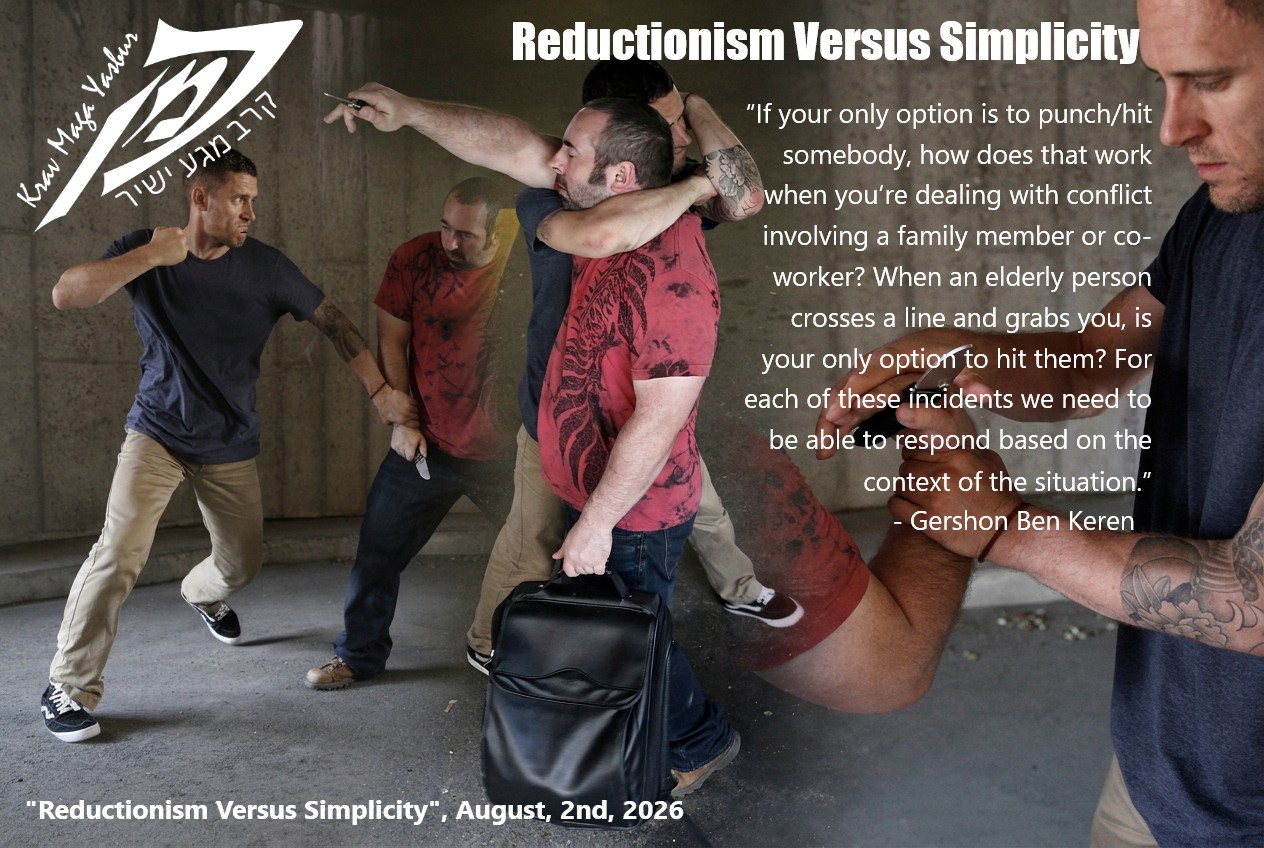
On my first Krav Maga instructor course with the IKMF (International Krav Maga Federation), one of the instructors basically said – metaphorically not practically – that one of the “goals” of Krav Maga was to reduce every solution to attacks and threats to one technique i.e., people would only have to know and practice one thing in order to defend themselves against everything. The point, as an idea, is valid, but practically “impossible”. However, ceteris paribus (all things being equal) it is ...(Click Here To Read The Article)
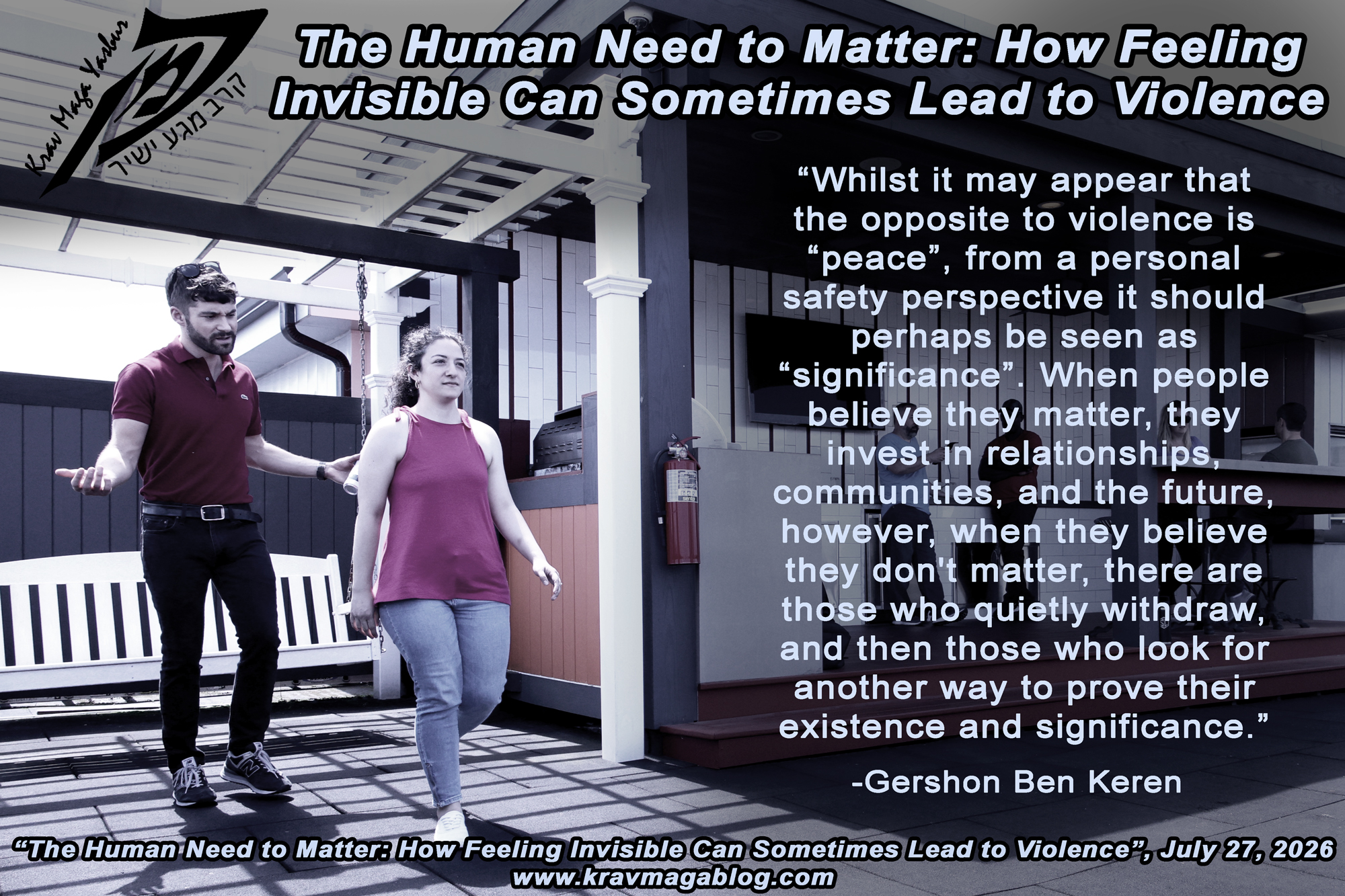
Imagine you walk into work tomorrow and nobody acknowledges you. Nobody says hello, or asks you how you’re feeling, or what you did last night etc. During meetings nobody asks you what your thoughts or opinions are, and when you leave for the day, nobody even notices you’ve gone. If this just lasted a day, you’d probably get over the awkwardness you felt, however if it lasted for a week, it would likely be upsetting, and if it happened for months or years, it is likely that it would change both ...(Click Here To Read The Article)
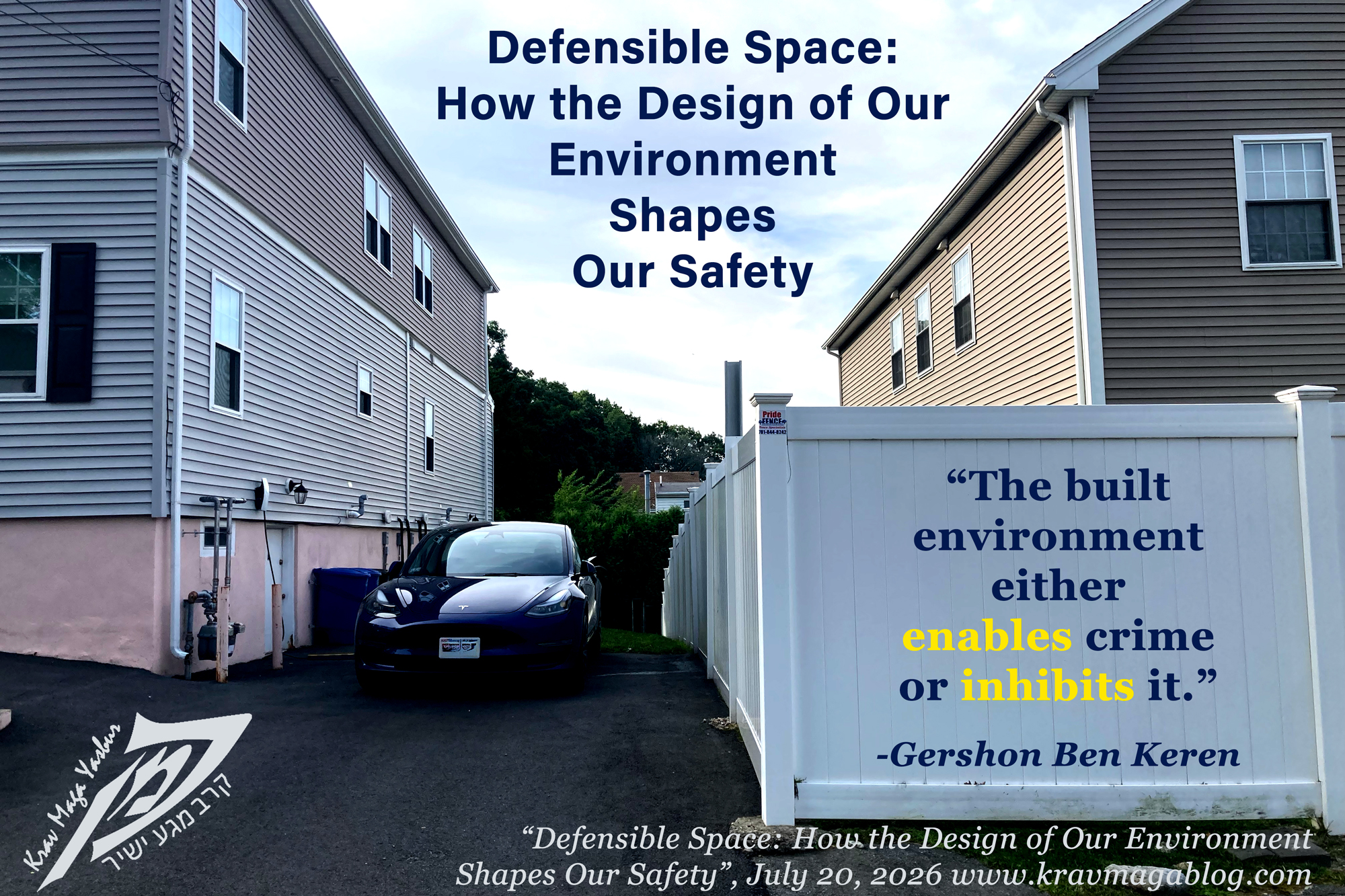
This article may at first seem more relevant to public planners than individual homeowners etc., as the research and findings came from that arena, however much of what was learnt/discovered can be applied to private properties. The idea of “defensible spaces” originated with the architect and urban planner, Oscar Newman. Newman developed his theory primarily through the comparative study of various public housing projects in New York City; in particular through his analysis of the Pruitt-Igoe c...(Click Here To Read The Article)
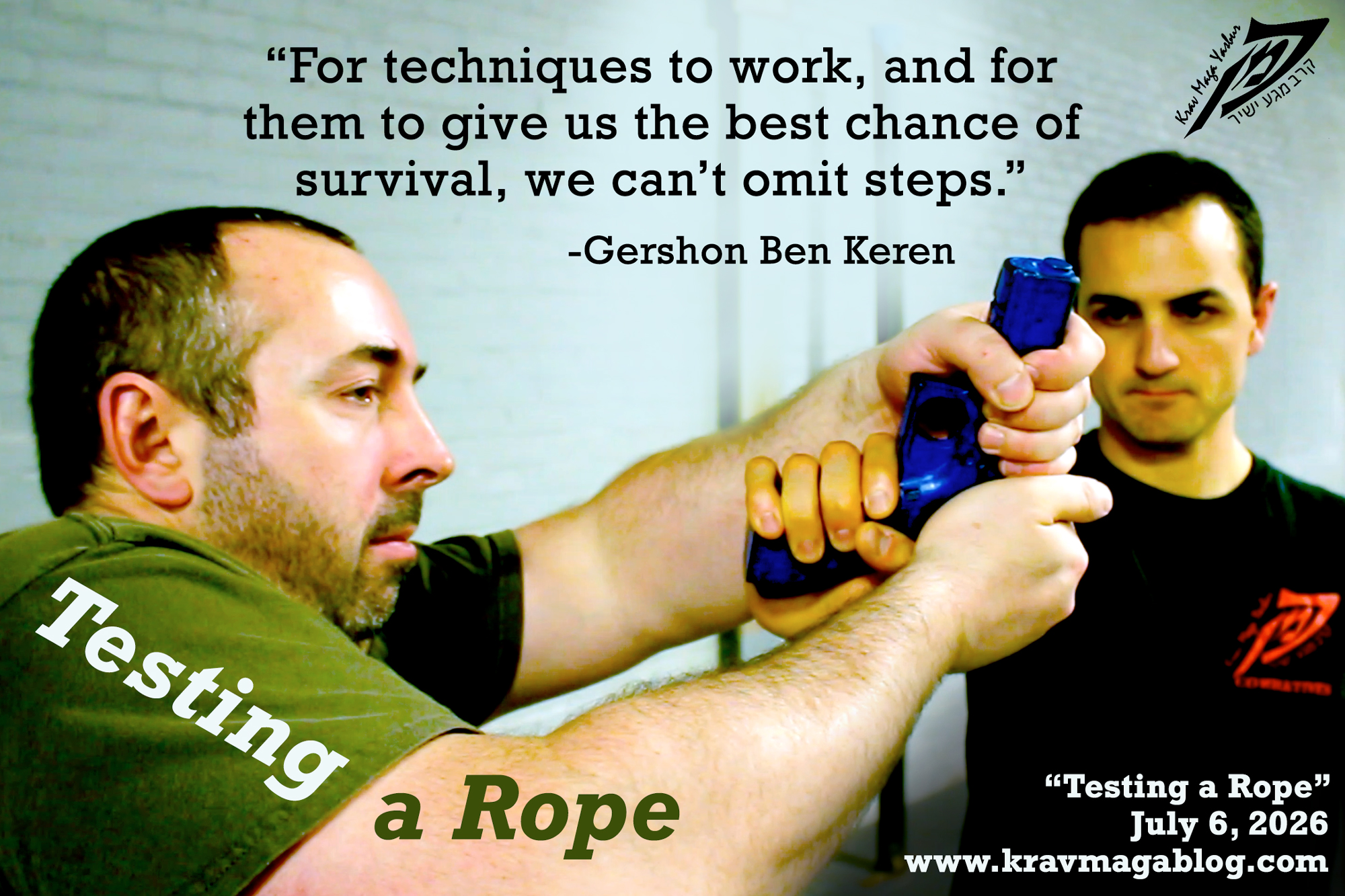
The saying, “Time exists to stop everything from happening at once,” is attributed to many different people. For me, panic occurs when people try to everything at the same time. Usually because they just want everything to be over immediately. I have written before about the importance of having an order of operations i.e., doing step one before step two, step two before step three etc. Often, when a person is practicing a technique such as a firearm disarm, they are focusing so much on the outc...(Click Here To Read The Article)
One of the big challenges as a parent or caregiver is giving children personal safety advice without scaring or possibly traumatizing them. Necessary advice that keeps them safe but terrifies them about the world is not particularly productive. Children and teenagers need to safely learn about how the world works, and if they are fearful to go out and engage with it then they will miss out on developing skills that they might need in the future. I’m also a big believer in adults learning how to ...(Click Here To Read The Article)
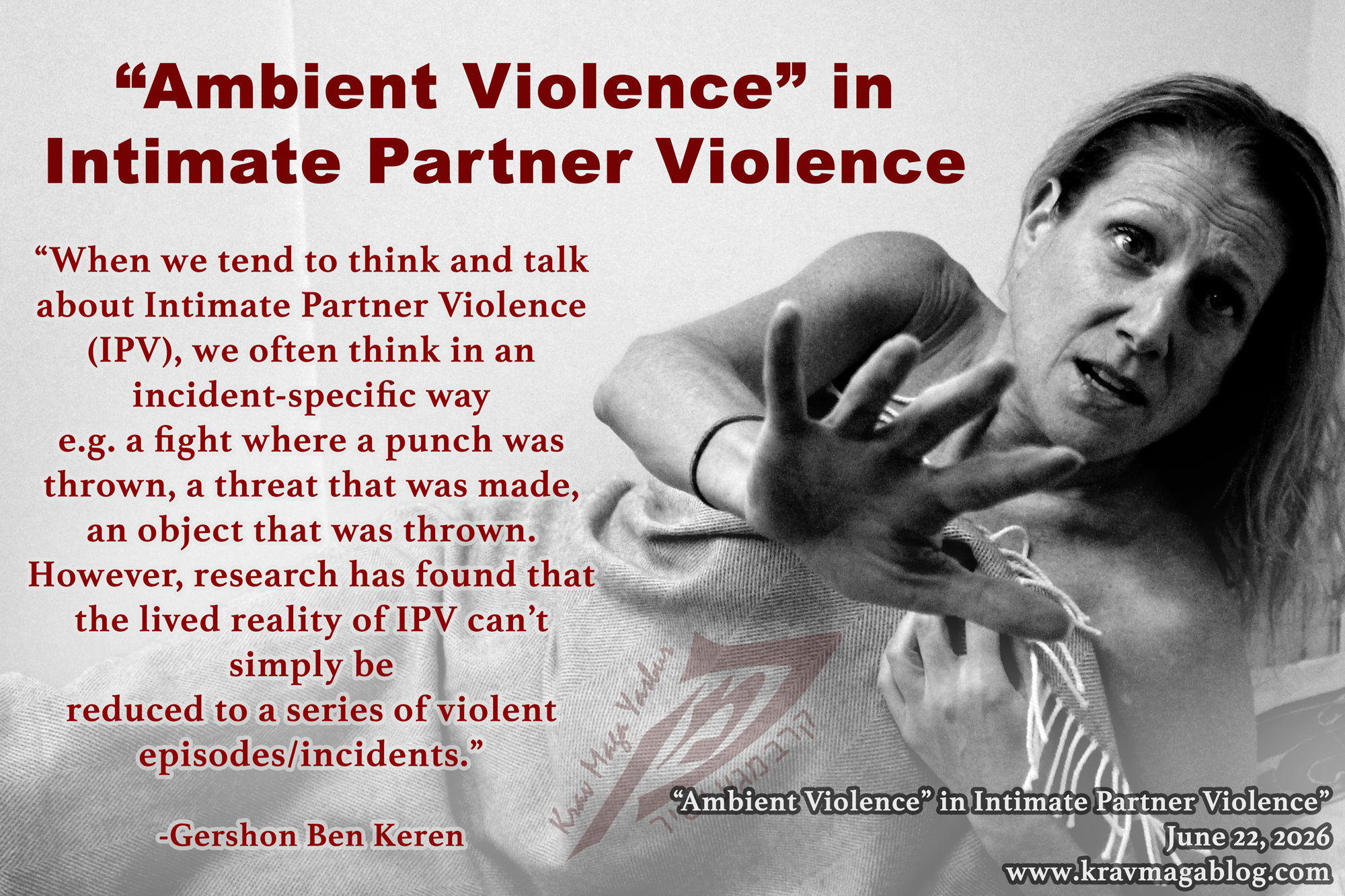
When we tend to think and talk about Intimate Partner Violence (IPV), we often think in an incident-specific way e.g. a fight where a punch was thrown, a threat that was made, an object that was thrown. However, research has found that the lived reality of IPV can’t simply be reduced to a series of violent episodes/incidents. For many survivors/victims, the most devastating part of their abuse is not the violence itself but the atmosphere in which they are made to live, i.e., a continuous, low-l...(Click Here To Read The Article)
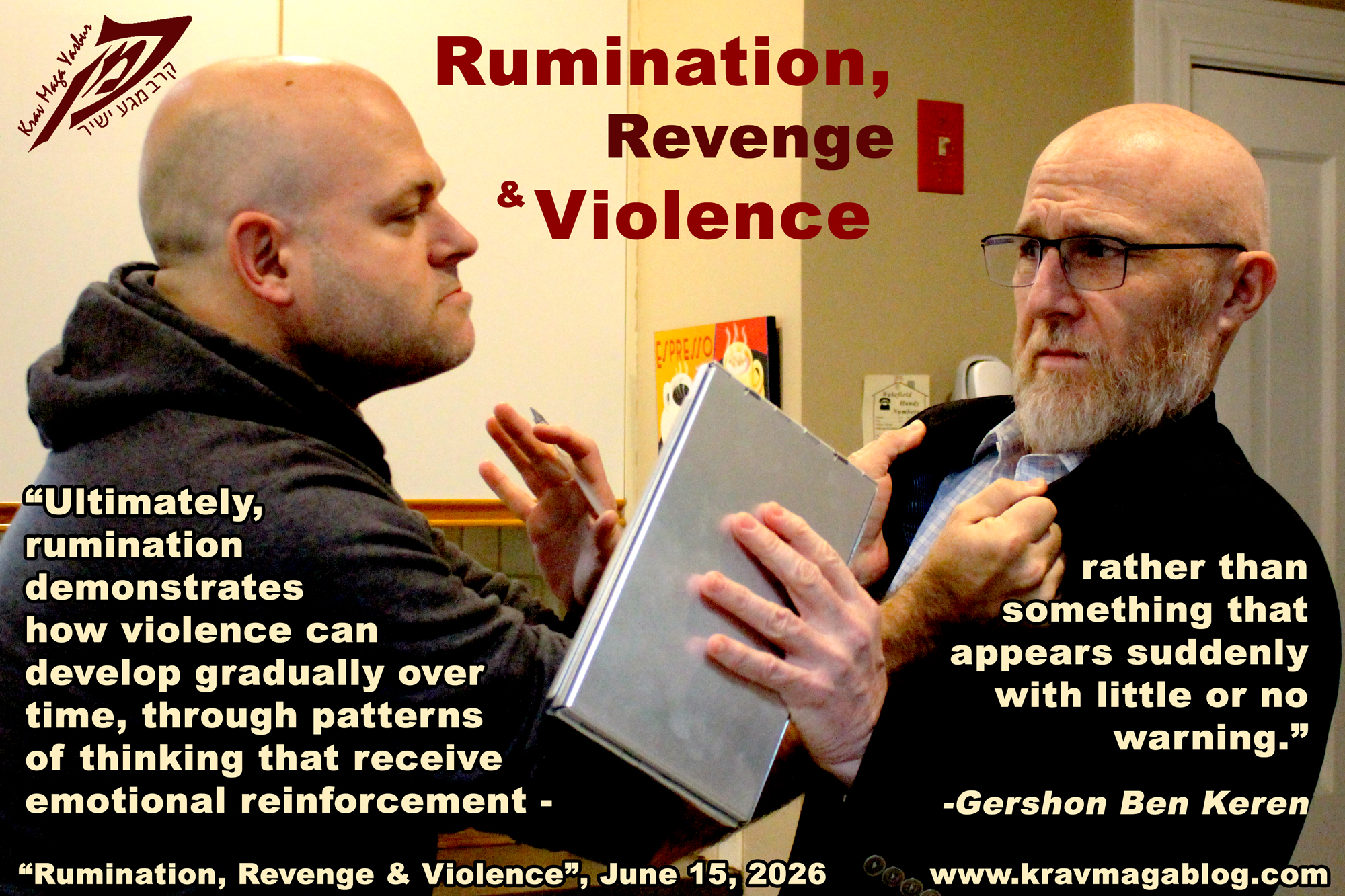
Some of us might know a person who finds it hard to let go of an injustice, whether real or perceived, that was committed against them. In some cases, it may be a minor one and with others a more major one. However, whilst most people are able to move on even when the injustice was notable and significant, there are those who just can’t seem to move past it. Some people keep their fixation private, whilst others want everyone to know about it, and may look for any opportunity in a conversation t...(Click Here To Read The Article)